It’s helpful to weigh HD’s picture-perfect finish against airbrush’s natural glow as you choose wedding makeup; you can consider skin type, photography needs, and long wear to pick the best look for your big day.
Getting to Know the Basics
You can weigh finish, coverage and camera needs to choose HD for a natural, skin-like look or airbrush for an ultra-even, long-lasting finish that photographs beautifully.
What exactly is HD makeup?
HD uses finely milled pigments and light-diffusing powders so you get natural-looking coverage that hides imperfections on camera without masking your skin’s texture.
The magic behind airbrushing
Airbrush sprays makeup as a breathable, ultra-fine mist, giving you flawless, pore-minimized coverage that resists heat and flash for long wedding days.
Expect layered application so you can build from sheer to full coverage, plus quick drying that cuts touch-up time; your makeup will blur redness, minimize pores, and stand up to hugging, dancing, and photography.
How They Compare in Real Life
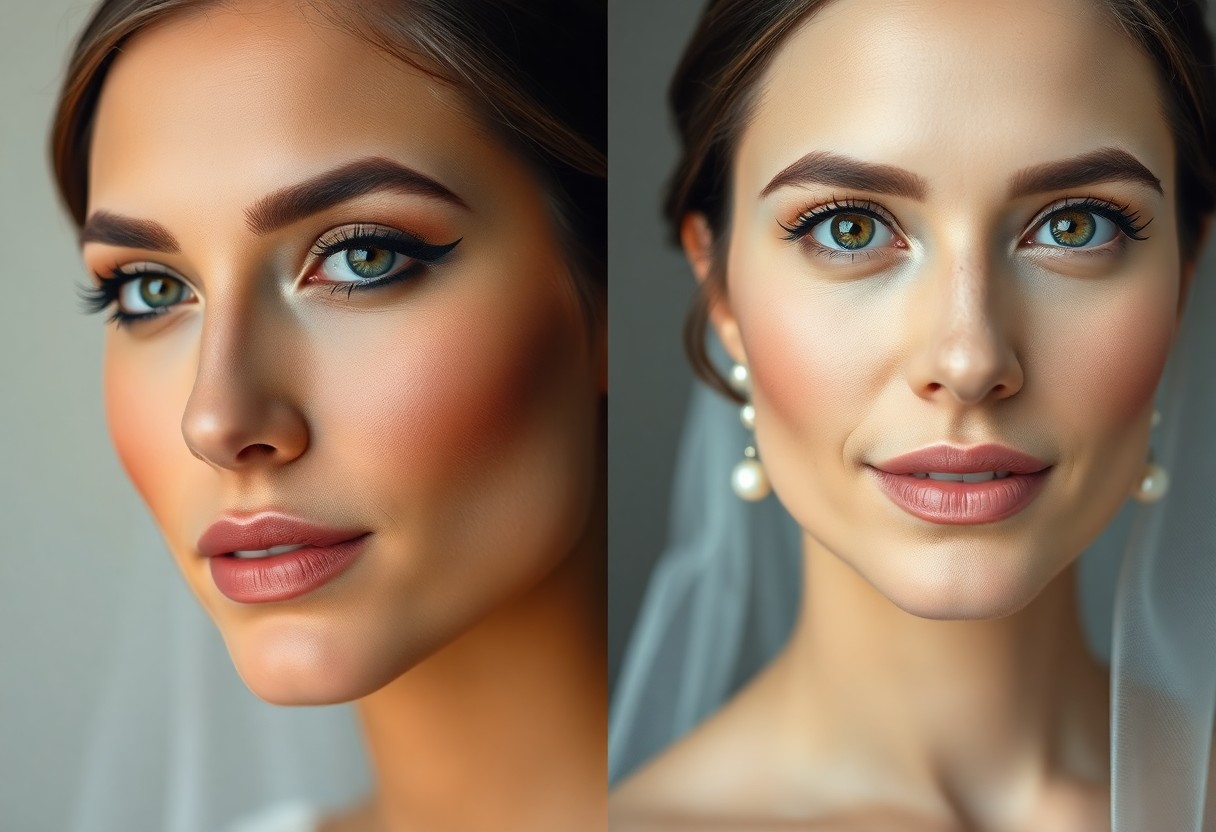
You can see HD captures fine detail and texture, while airbrush produces a soft, even veil that photographs smoothly; choose based on your skin and how groomed you want to look.
| HD Makeup | Airbrush Makeup |
|---|---|
| Applied with brushes/sponges; you get targeted control. | Sprayed with a gun; you get a thin, even mist. |
| Medium to full coverage; you can spot-conceal easily. | Sheer to buildable coverage; you layer without cakiness. |
| Shows true skin texture; you’ll need good prep for pores. | Creates a blurred finish; you’ll look smoother in photos. |
| Quick touch-ups with powder or concealer for you. | Long-wearing with minimal touch-ups for your long day. |
Application techniques explained
Brushes and sponges apply HD for targeted coverage, while a compressor gun mists airbrush formula so you can layer thin, camera-ready coats.
Texture and finish on your skin
Finish differs: HD mimics skin texture and pores, while airbrush creates a blurred, photo-friendly surface that makes you look smoother at a distance.
Your skin texture, oiliness and the photo style matter: HD sits closer to skin and can reveal dry patches or enlarged pores unless primed, while airbrush gives an even film, hides minor flaws, reduces shine, and often needs fewer midday touch-ups so your photos stay consistent. Choose based on how natural or perfected you want your shots to read.
Why You Might Love HD Makeup
HD makeup gives you camera-ready clarity while keeping your skin’s natural texture, so photos capture a polished yet authentic version of you.
A natural look for every skin tone
You’ll enjoy lightweight coverage that blends with your undertones, minimizing redness and evening your complexion without masking your natural color.
Easy touch-ups throughout the big day
Quick touch-ups let you stay fresh between events, using a dab of concealer or a light press of powder to maintain your look for photos.
During the day, pack blotting papers, a travel-size pressed powder, a small concealer stick, a fingertip brush, and a mini setting spray so you can fix shine, tame smudges, and spot-conceal without caking; blot first, press powder lightly, then mist to refresh your HD finish for every photo moment.
The Perks of Going Airbrush
Airbrush gives you a light, blurred finish that photographs beautifully and lasts hours, reducing midday shine and minimizing touch-ups on your big day.
That flawless, long-lasting glow
You get a skin-like radiance that stays even through photos and long events, so your complexion looks fresh from vows to reception.
Water-resistant and sweat-proof benefits
Feel confident knowing airbrush blends form a thin, water-resistant layer that reduces smudging and holds up through hugs, happy tears, and dancing.
Outdoor ceremonies challenge makeup, and airbrush’s fine mist helps repel humidity and light moisture so you won’t see streaks; you should still pack blotting papers and a small touch-up kit for finale photos.
Choosing Based on Your Skin Type
Assess your skin to choose HD for pore-blurring, high-definition photos or airbrush for softer, dewy coverage; match foundation texture to dryness or unevenness for best results.
Best options for dry or textured skin
Airbrush works best for you if you have dry or textured skin; apply thin, luminous layers that won’t settle into flakes and use rich moisturizer plus hydrating primer for a smooth finish.
What works wonders for oily skin
HD works well for oily skin, offering finely milled pigments and matte options that resist shine; pair with oil-control primer and powder to keep your look photo-ready.
You should choose oil-control primers with silica or clay, apply foundation in thin layers, and buff with a dense brush or sponge for even coverage. Combine blotting papers and a mattifying setting spray during the day to control shine without cakey buildup, keeping photos clear.
Making Your Final Decision
You can weigh HD versus airbrush by considering photo priorities, skin type, and desired finish; choose the method that keeps you looking like yourself both in person and on camera.
Considering your wedding venue and weather
If your wedding is outdoors, hot, or humid, airbrush often offers longer wear and less transfer, while HD may be best for studio-lit portraits or very detailed close-ups.
The importance of a makeup trial
Schedule a trial to test products, lighting, and photos, check wear through meals and hugs, and confirm the exact finish you want for your wedding day.
During the trial, bring photos, your dress and hair accessories, and any skincare or products you plan to use; ask for flash-test shots, note how the makeup feels after hours, and discuss tweaks with your artist so you leave confident in the final look.
Conclusion
Upon reflecting, you can choose airbrush for lightweight, long-wear, photo-ready coverage, or HD for a more natural, blendable finish that responds better to touch-ups and textured skin; weigh your skin type, photography, and budget to decide.